Made in Sishane (2009)
Dutch artist Teike Asselbergs and architect-designer Asli Kiyak organize a workshop in Istanbul focusing on how designers can collaborate within the network of small producers in the Light District of Sishane. Results from the workshops will be shown in various shop-displays in Sishane.
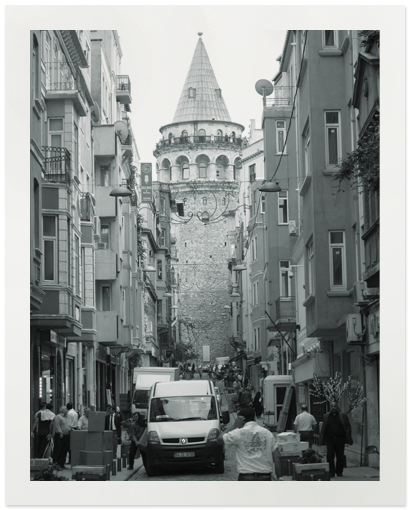
The workshop takes place in Sishane, the district in Istanbul specialized in light production, close to the landmark Galata tower. Sishane has about 10.000 studios and shops specialised in light and electricity and has been the light producing district of Turkey for more than 100 years. It was here that the first electrical light came to Turkey and streetlamps were first installed. Because the district was close to the Galata Port, a 19th century type 'Silicon Valley' developed where the new technology came ashore. During the workshop participants learn to see the social and commercial networks in the district.
In one week designers, artists and architects are introduced to the unique production network of small producers in the district. Each producer has a workshop specialized in one item, material or a whole range of materials and techniques. Most master-craftspeople use simple machines for manipulation of their materials. When an order for 100 lamps comes in one studio makes the foot of the lamps, another the ironwork in the lampshade, yet another the covering of the lampshades in textile etc. The producers self-organize and divide the work. There are also networks that are interdependent on the network of producers: tea-men, people who carry loads from one location to another or those who retrieve money from other shops or studios, bookkeepers and salespeople working in the district. Together they form one big production network in a very small area. During the workshop participants are assisted to collaborate with this production network.
Pre-capitalist and capitalist cultures mix in Sishane. Shopkeepers tell customers that they should go to another shop where the item they want is cheaper, or give unasked negative advice about items they themselves have on sale in order to build relationships based on trust. It is very usual that when a customer comes into a shop and requires about an item that the shop does not have in stock or on sale, a person from the shop goes out and takes the item from another shop in the district, in the meanwhile the customer is served free tea or coffee. Sometimes the owner of the shop even closes his shop and walks with the customer to another shop where the item is for sale. Upon return of the shop-keeper who 'borrowed' the requested item from the other shop, sells the item to the customer. Later in the day an apprentice of the other shop visits all the shops that 'borrowed' products for clients and either retrieves the money or the product. Whole streets are lined with similar looking shops and the shops are not only on street level but all the way up to the 10th floor of buildings, most of which were originally houses.
Working in Sishane will help participants understand how to produce design in the setting of an area of small producers. Your design will contribute to the sustainability of the district: there is a lot of knowledge about lightning in the district that is now used for traditional local products that are increasingly loosing market share to cheap Chinese imports. The advance of tourism in the area also poses both threats and opportunities to Sishane. Because of it's flexibility and ability to produce more complex designs in small series, learning how to work with designers and creating added value through design, will help the unique production network in the district to survive.
| Materiaal: |
Kunststof en staal |